

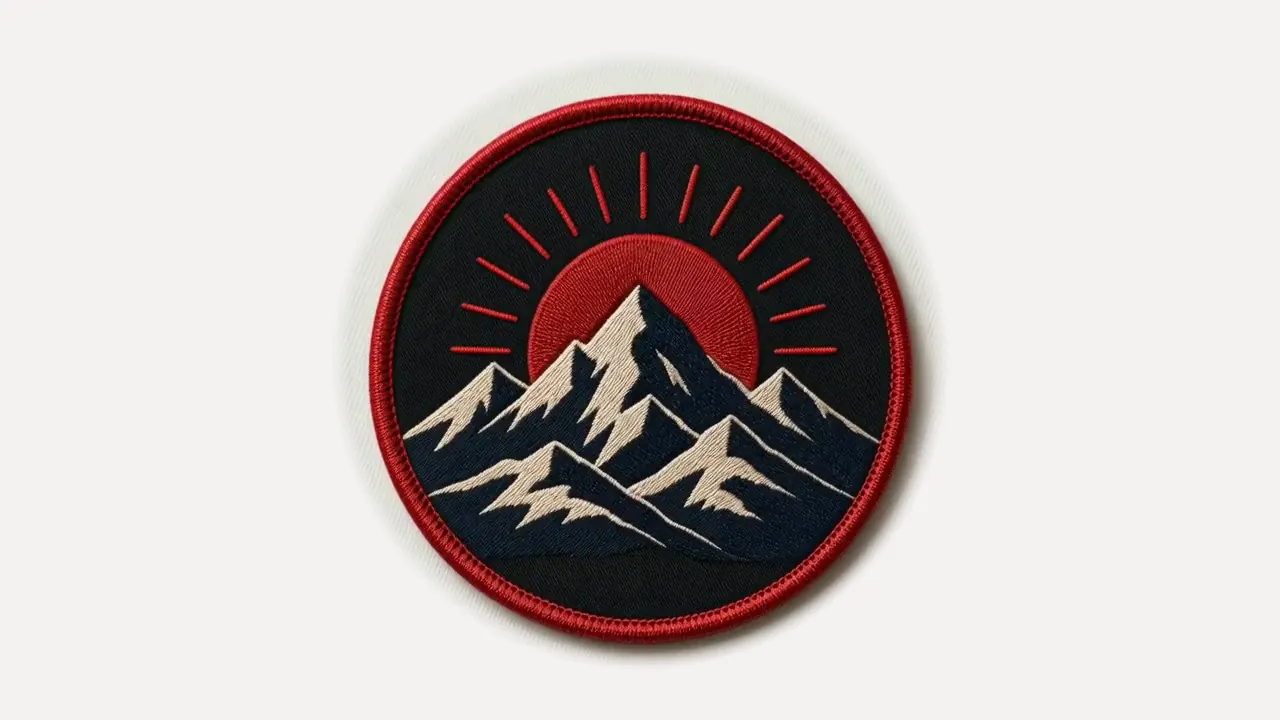
Front
Identity
Thread direction, density, edge, and relief decide how the mark reads in material.
Embroidered face · stitched edge
Independent patch atelier · built in thread
Custom patches engineered from first line to final edge—made to be noticed, handled, and remembered.
From vector to volume
Before thread, there is intent: silhouette, hierarchy, and a mark worth remembering.
Density, underlay, color order, and edge logic turn the artwork into something a needle can execute.
Thread catches light. The edge gains weight. A graphic becomes an object made to be handled and worn.
The result
Built with intention, reviewed as an object, and ready to carry your identity.
From identity to object
A patch is where a drawing becomes physical—mapped into stitches, built in layers, and finished to live in the real world.
One patch, two sides
A patch succeeds only when its face carries the identity and its reverse fits where the object needs to live.
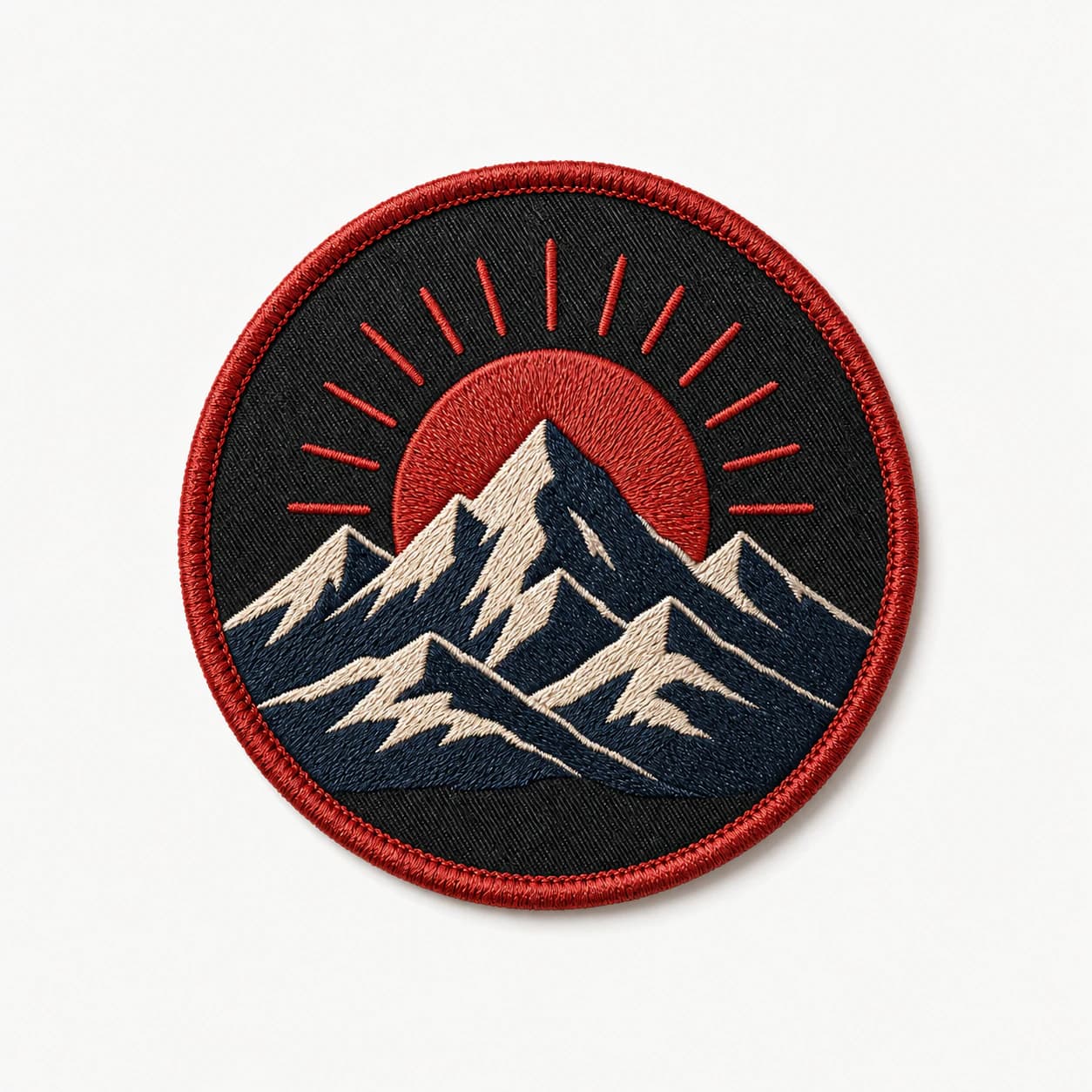
Front
Thread direction, density, edge, and relief decide how the mark reads in material.
Embroidered face · stitched edge
Reverse
Sew-on, iron-on, adhesive, or hook-and-loop is chosen around use—not added as an afterthought.
Backing selected for final use
Scroll, drag, or choose a side
The material library
Choose by texture, detail, depth, durability, or finish. Every material solves a different version of the same idea.
 EmbroideredDepth, versatility, and classic thread characterMerrowed border, rayon thread, true satin coverage.02
 ChenilleBold shapes, varsity scale, and soft volumePlush pile on a felt base, chain-stitch outline.03
 WovenSmall type, fine lines, and flatter detailHigh thread count, minimal relief, tight registration.04
 PVC / RubberWeather exposure, hard use, and dimensional relief3D relief, matte-to-gloss surface, no fabric weave.05
 LeatherQuiet branding, warmth, and premium restraintPressed relief, subtle burn edge, stitched perimeter.06
 SublimatedGradients, photography, and unrestricted colorUnlimited color, sharp detail, merrowed border.07
 BullionCeremonial marks, metallic light, and high reliefGold and silver wire, hand-embroidered, felt base.08
 Name / TextNames, identifiers, and direct legibilitySatin-stitch letterforms, thin merrowed border.
Not sure which construction fits? Start with where the patch will live.
What happens next
You do not need production-ready artwork to begin. Each approval closes one decision before the next stage starts.
We begin with use: where the patch will live, how large it can be, what it must survive, and what it needs to communicate at a glance.
The artwork is matched to the construction that can express it best—from dimensional embroidery and chenille to fine woven detail or moulded PVC.
The drawing becomes a stitch map. Direction, density, underlay, pull compensation, and running order are planned before a needle moves.
A stitch-out or production proof reveals what a screen cannot: real thread, real scale, real edges, and the way light moves across the surface.
The approved construction runs with controlled thread, base material, borders, and backing—then each piece is cut and finished for its final use.
Edges, alignment, color, surface, and attachment are checked before the patch leaves the worktable. The last step is consistency.
The worktable
Ten pilot studies, selected to test detail, depth, softness, grain, and reflected light—not to fake a finished client portfolio.


Proof before promises
These are the four conversations a physical proof needs to settle. Final tolerances and production commitments stay client-approved before launch.
Does the mark still read at its physical size?
Small type, negative space, and the outer silhouette are reviewed before detail is allowed to compete.
Do outlines, fills, and internal regions land together?
The proof exposes gaps, drift, and crowded geometry that a flat artwork file cannot show.
Does the construction carry the intended character?
Thread direction, pile, moulded levels, grain, or metallic wire should feel intentional under changing light.
Is the object finished for where it needs to live?
Border, cut line, backing, and handling are checked as one system—not as finishing notes after approval.
Your idea is enough to begin
Send the artwork—or the roughest version of the idea. We’ll shape the material, stitch path, edge, and backing around where it needs to live.
Useful, not required
